
Multi-Team MBSE Collaboration and Review Baselines
01
Project Background
When multiple teams model a system, packages, diagrams and reports can proliferate as separate copies. One team may continue editing an old version after another releases a new one, leaving feedback attached to removed elements or design ownership unclear.
This method case focuses on model review, access management and baseline handover in engineering collaboration, organizing reusable environment configurations, review workflows and delivery checklists.
02
Technical Approach and Collaboration Structure
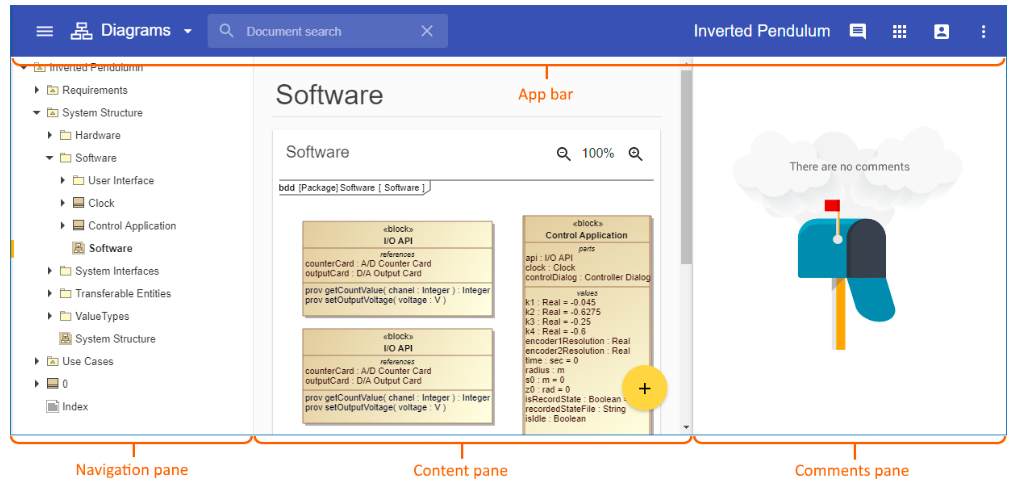
Partition the project by modeling responsibility, with designated owners for shared types and interfaces. Separate editors, reviewers and publishers through explicit permissions. Working versions, review versions and release baselines are distinct; a local save is not a release.
Compare changes to model elements and relationships, not just diagram appearance. Before merging offline work, review branch differences and reference integrity, then verify the merged result. Tool-specific locking and permission behavior must be checked on the deployed version.
03
Implementation and Review Closure
Use a small model to validate creation, editing, updating, review and release before extending to disciplinary work packages. Define who receives shared-element change notifications and retain the pre-merge version. Check references and diagrams carefully when elements are moved or deleted.
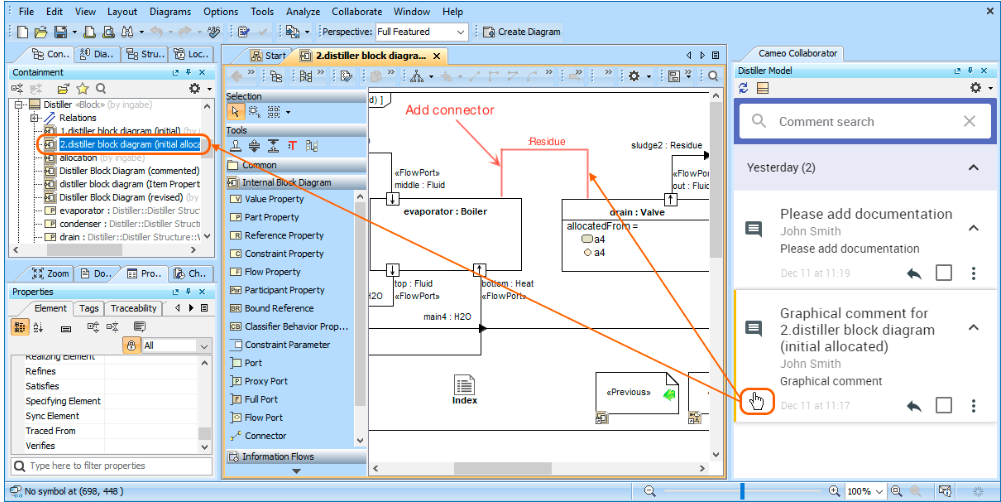
Attach review feedback to an element and version, recording ownership, disposition and verification. Before release, resolve issues or explicitly accept them as open, align models, review records and reports to one baseline, and check restoration by the receiving team.
04
Deliverables and Acceptance
Deliver the model project, role-permission matrix, shared-library versions, branch and merge records, review closure list, baseline package and recovery steps. State required software and licenses, while managing credentials through a separate secure channel, never in the case or public package.
Acceptance covers read-only review, authorized editing, updates and baseline restoration. A controlled modification checks that others see the correct version, feedback still points to the correct object and the report matches that model version.
05
Applicability and Security Boundaries
The method suits multidisciplinary or cross-team model ownership. Establish network conditions, data classification, software licensing and operational responsibility first; collaboration does not imply that all members should have full export or public-sharing rights.
Confirm encrypted connections, permission inheritance, backups and audit settings for the actual tool version. Validate a small deployment before expanding it.
06
Implementation Outcomes
Link model ownership, review comments and released versions in a shared collaboration record to reduce version queries and manual report comparison. After implementation, track comment resolution time, version mix-ups and baseline recovery results.
Track version inconsistencies, merge rework, review-issue closure time and restoration exercises. Without consistent measurements and before-and-after baselines, report whether the workflow is functioning rather than inventing efficiency percentages.