
Which projects fit?
For mechanism visualization, offline rehearsal, interface integration and training. Dynamics or contact prediction requires a separately agreed physical model and calibration scope.
Robot Digital Twin
Reduce integration risks with physical robots and develop reusable motion and scenario assets.
Robot twins should include mechanism models, frame and unit conventions, joint-state mappings, task scenarios and integration records. New Horizon starts with single-axis, low-speed and replayable data before multi-axis tasks, separating observation and control permissions.
Last updated: 2026-10-13 · New Horizon Digital Outsourcing Team
View delivery and acceptance detailsOther Capabilities in This Domain
Explore implementation guides and case studies to understand input requirements, technical approaches, delivered assets, and methods for evaluating outcomes.
Engineering delivery brief
For mechanism visualization, offline rehearsal, interface integration and training. Dynamics or contact prediction requires a separately agreed physical model and calibration scope.
Provide topology, joint limits and zero positions, mass and inertia, tool and workpiece frames, control protocols, timestamps and safety constraints.
Following joint angles visually does not validate dynamics. Physical motion requires emergency stops, speed limits, authorization and disconnect policies; simulation results do not constitute site safety acceptance.
Mechanism count, protocol access, calibration conditions, contact complexity and site sessions drive cost. Use replay data to diagnose mapping issues before occupying equipment time.
Acceptance Evidence
Check zero positions, signs, scaling, limits and end-effector poses axis by axis.
Acceptance Evidence
Use timestamps to inspect delays and test disconnects, reconnections and authority handover.
Acceptance Evidence
Fix trajectories, speed, load and versions, recording position error and exception recovery separately.
Related case study
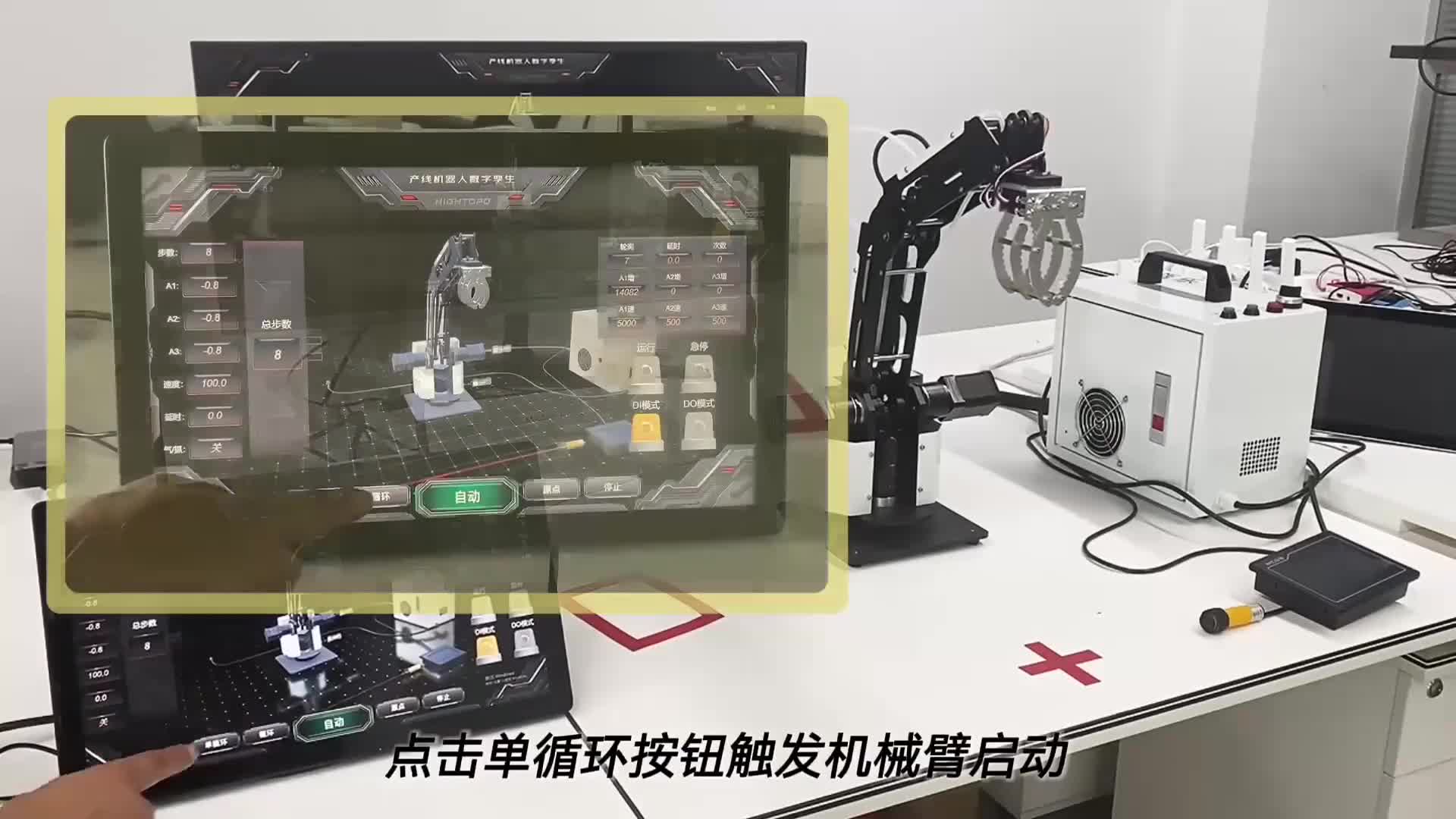
Organize inspectable robot-arm digital twin integration around joint states, tool coordinates, and operation-step signals.
Read the full case studyRelated standards and technical documentation for solution selection and implementation.
Describe your stage objectives and constraints (without classified details), and we will provide scope recommendations and a deliverables list.