
SysML Behavior Simulation for Rail Cab Changeover
01
Project Background
Cab changeover requires several control roles to agree on the current mode and operating conditions. A single flowchart can conceal distinctions between state ownership, condition evaluation and signal exchange, making an interrupted flow difficult to explain.
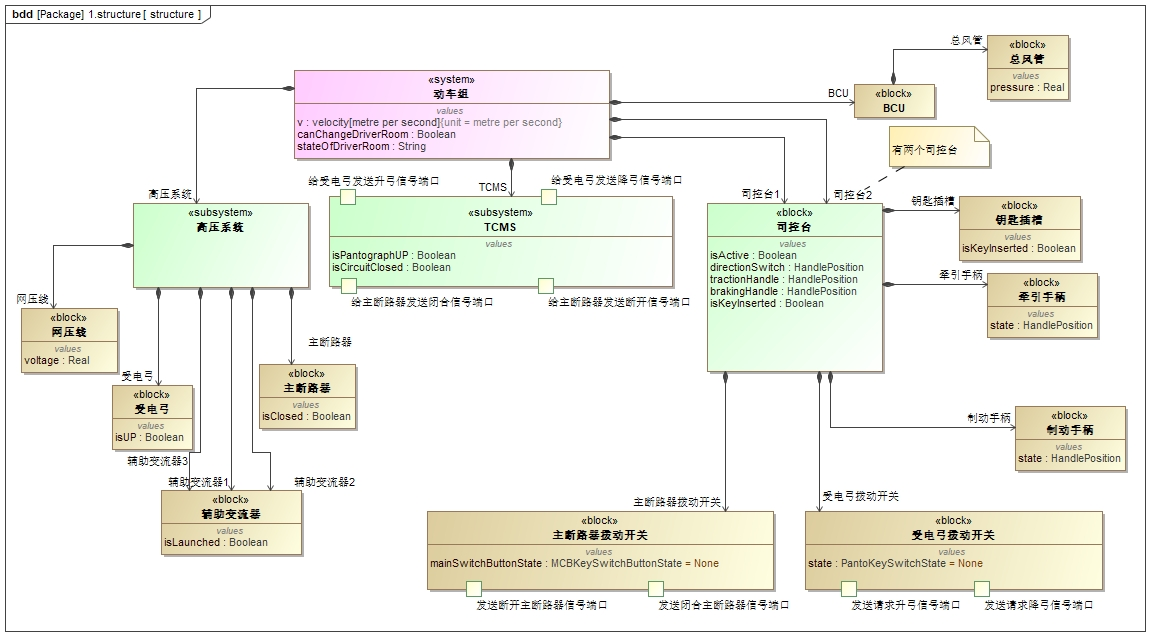
This method case organizes a software verification workflow from structural modeling to scenario review, covering train cab-change architecture, signals, state behavior and activity checks.
02
Technical Approach and Behavior Organization
Architecture bounds participants and interactions, states represent operating modes, and activities express condition checks and processing steps. Signal connections carry defined events, while displayed state reflects model output rather than replacing internal evaluation.
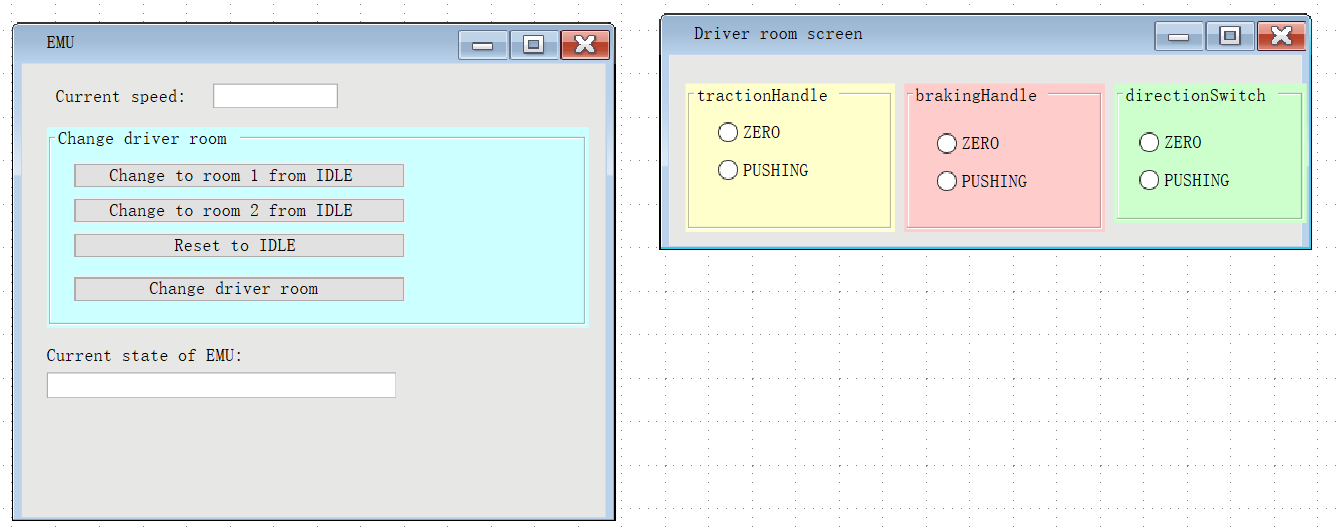
Transitions identify triggers, conditions and outcomes, and associated activities must execute in the correct context. Unmet-condition paths have explicit stop or return semantics, but actual policy comes from project requirements, not inference from a demonstration display.
03
Implementation and Scenario Replay
Identify participants, initial mode and objective, then create the signals for one complete scenario. Link each decision to a requirement and inspect activities and state machines for duplicate actions, missing feedback and ambiguous termination.
Retain input order, state changes and condition evaluations during execution. Replay the same version to check consistency; after interface or condition changes, rerun affected successful and unsuccessful paths rather than demonstrating only a smooth completion.
04
Deliverables and Acceptance
Deliver role and signal dictionaries, state and activity models, scenario configuration, event records, issue handling and reproduction instructions. Document the execution engine's supported scope and disclose unsupported timing or concurrency semantics.
Accept each scenario by reviewing its initial conditions through its final state, explaining the input basis of key transitions and tracing exception records to model objects. Smooth animation, clickable buttons and visual completion are not criteria for logical correctness.
05
Applicability and Responsibility Boundaries
Suitable for cross-role process clarification, logic design comparison and collaborative design training. Field use must follow professional safety analysis, operating rules and authorization procedures.
Other equipment can reuse role decomposition, event recording and replay methods, but not specific states and conditions. Physical integration requires separate interface verification and an explicit account of differences between simulation assumptions and equipment capabilities.
06
Implementation Outcomes
Behavior models turn interactions between roles into replayable records, helping reviewers locate disagreements around the same event and supporting requirements clarification and interface integration.
Assess modeling and review efficiency by comparing scenario explanation time, recurring condition omissions and issue reproduction success under consistent scenario complexity and review criteria.