
Aircraft Engine Control MBSE and Requirements Verification
01
Project Background
Aircraft engine control involves commands, monitoring, controllers and actuators. Natural-language requirements often mix conditions, actions and exceptions, allowing system, software and hardware teams to interpret the same statement differently until integration.
The case addresses control-system design methods without product-specific parameters. Modeling first bounds operating modes and external inputs and outputs, records requirement provenance and open questions, and separates behavioral-model questions from those requiring physical testing.
02
Technical Approach and Model Organization
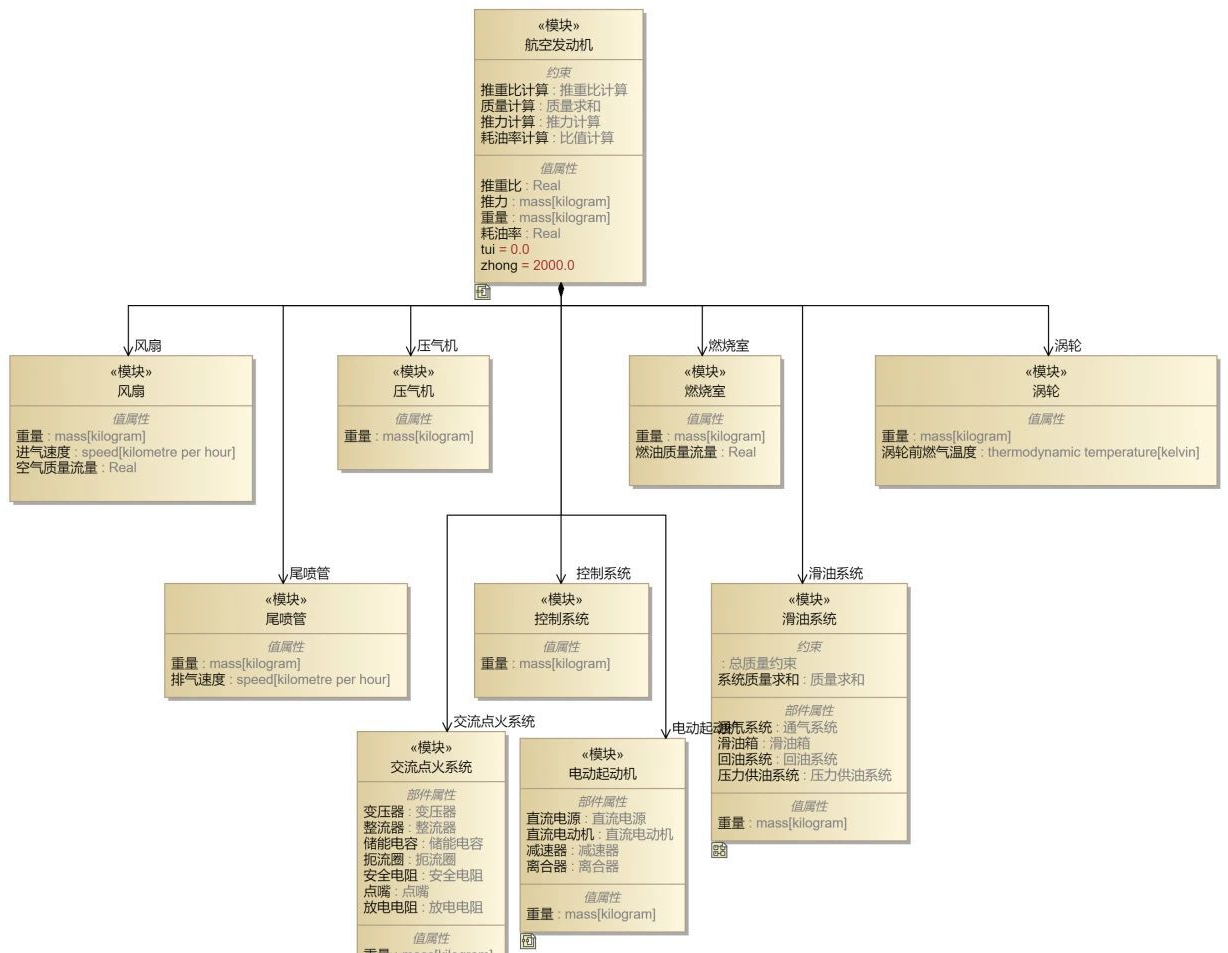
Requirements are classified by function, interface and performance constraint. Activities, sequences and states describe preconditions, participants and transitions. Responsibilities are allocated to logical modules and mapped to controller software, hardware and actuators, with explicit links across the layers.
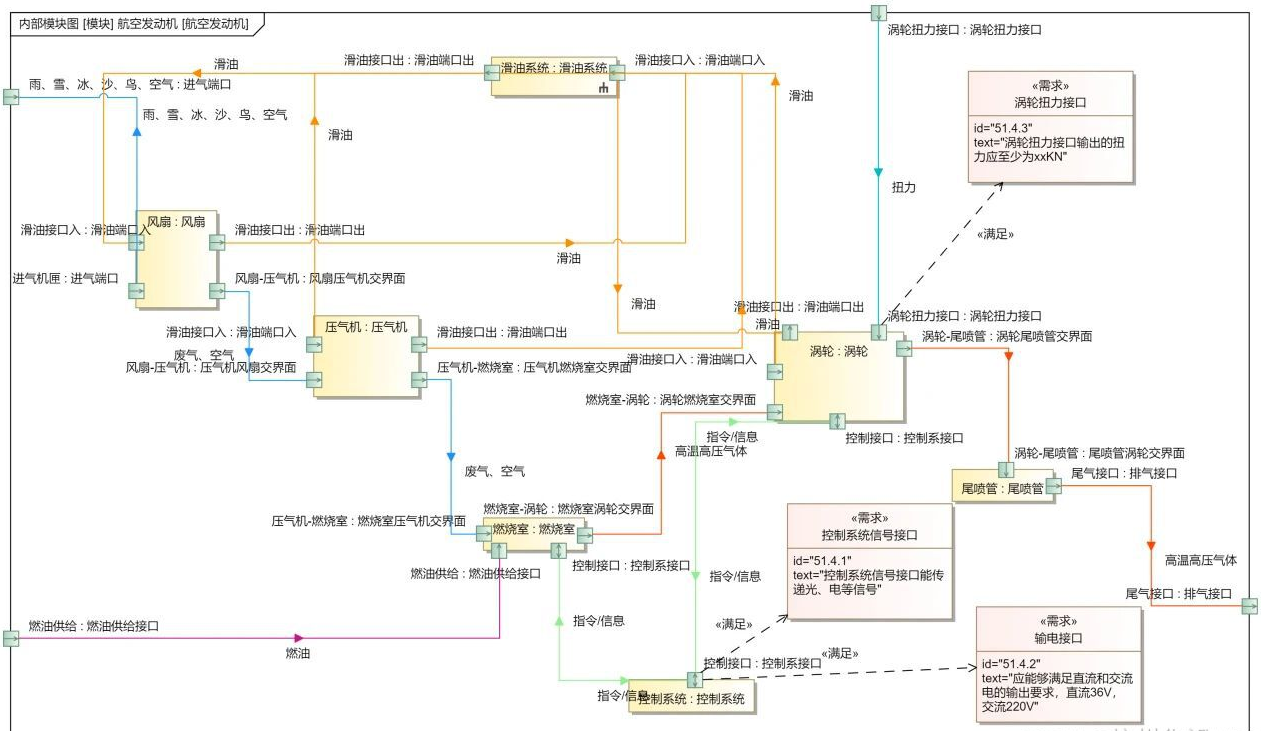
A signal uses one identifier across requirements, ports and cases, with type, units and validity conditions. Parameter constraints organize design checks; uncalibrated values do not support quantitative simulation conclusions, and animations do not replace verification records.
03
Phased Implementation
Start with one complete control scenario, its requirements and context, then review events, states and interfaces along the nominal path. Add unmet conditions, invalid inputs and interrupted flows, recording ambiguous cases as issues instead of treating them as normal execution.
After scenario review, allocate functions to components and check that each action has an owner and each input a source. When a requirement changes, inspect linked behavior and cases before revising the model, rerunning affected checks and retaining both baselines.
04
Deliverables and Acceptance
Deliverables can include requirements and trace models, mode views, an interface dictionary, cases, issue-resolution records and model instructions. Review diagrams and lists are exported from one baseline to avoid reports referring to outdated model states.
Acceptance follows agreed scenarios: a requirement must lead to its responsible module, behavior and check result, and a change must identify affected objects. Model-check and physical-test outcomes remain separate; items lacking test evidence remain unverified.
05
Application Boundaries and Reuse
This method case supports requirements and architecture reviews for control-intensive equipment. Professional safety analysis, control-law validation and physical tests are conducted separately with the required approvals.
Reuse requirement attributes, port definitions, mode-modeling rules and issue categories first. Operating conditions, criteria and control constraints must be confirmed for each new project rather than copied with the example.
06
Implementation Outcomes
The approach turns informal coordination into inspectable model relationships, bringing missing conditions, unclear responsibilities and interface ambiguities into design review. These are supported improvement mechanisms, not measured customer benefits.
Evaluate the approach against a fixed scope and baseline using change-impact analysis time, recurring review issues and valid requirement-to-test-case links.