
Which projects fit?
For projects connecting multiple systems, explaining equipment behavior or integrating virtual and physical components. Start with one asset, one task chain and a defined acceptance scenario set.
Digital Twin Outsourcing
New Horizon develops digital twins for equipment, robots and complex missions, delivering object models, data mappings, behavior logic and operator interfaces together. Acceptance checks state fidelity, event replay, controlled commands and independent deployment and reproduction.
Last updated: 2026-10-13 · Provider: New Horizon Digital Outsourcing Team
View delivery and acceptance detailsIndex

Deliverables
| Type | Description |
|---|---|
| Scene Assets | 3D/logical scenes, resource models, and event models |
| Operational systems | Real-time data connections, control clients, and collaborative sessions |
| Custom software | Business plugins and toolchains (source code available by agreement) |
| Acceptance materials | Integration records, latency/synchronization metrics, and handover documentation |
Our approach to value for money draws on years of project experience and lean team operations: reusing model libraries, scenario templates, and toolchains to reduce duplicated development. Our aspiration is “around 10% of the budget and 30% of the time, aiming for a 100% increase in efficiency.”
We recommend four acceptance dimensions: scene completeness + closed-loop data/command flow + usability of collaborative control + documentation handover, rather than visual appeal alone.
Start with a logical/geometric twin and a simulation-driven operational baseline, reserve data interfaces, then switch to actual data once field data is available.
Desktop clients and multiple LAN terminals can be included as agreed for the project. Specific protocols, permissions, and latency targets are fixed during requirements clarification.
Yes. New Horizon's outsourcing services support source-code handover within the agreed scope and local deployment instructions by default.
For robot digital twins, check coordinates, geometry, joint definitions, and time synchronization layer by layer before discussing dynamics parameters.
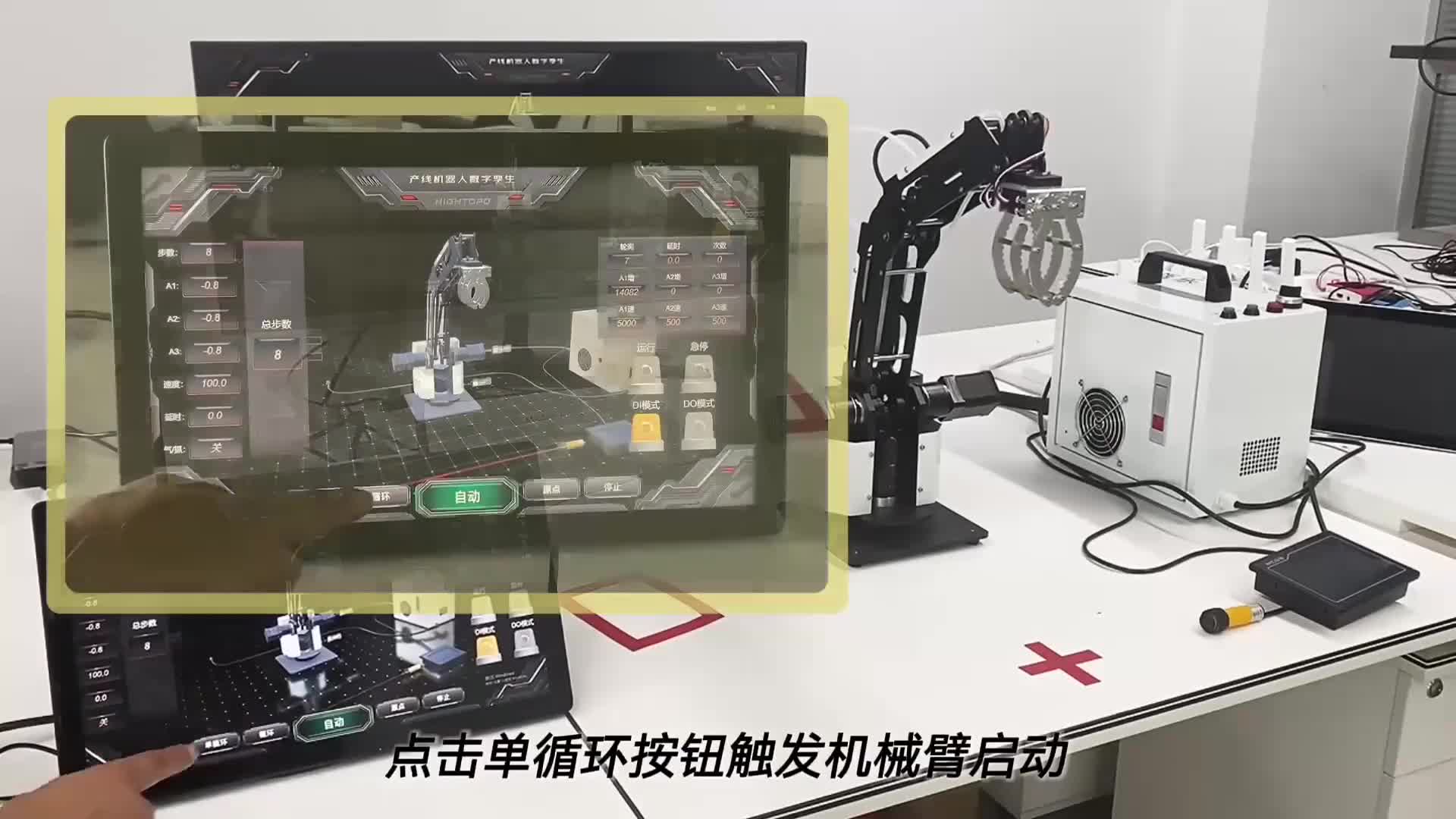
A robot-arm workstation twin encompasses more than the arm itself: it also includes fixtures, workpieces, tools, sensors, and control workflows.
A swarm twin needs stable identities, timestamps, and state sources for each UAV, with simulation, replay, and physical aircraft clearly labeled in the interface.
Lunar exploration twins should distinguish three levels: visualization scenes, mission-level simulation, and physical prediction.
Multi-user collaboration must first resolve who has control authority, rather than merely connect several browsers to the same scene.
Historical replay requires records of states, events, and versions, rather than screen recordings alone.
Examine digital twin data integration, state mapping, command permissions, fault recovery, and phased acceptance.
Present four main acceptance areas for outsourced digital twins to avoid evaluating visuals alone.
Other service domains
Engineering delivery brief
For projects connecting multiple systems, explaining equipment behavior or integrating virtual and physical components. Start with one asset, one task chain and a defined acceptance scenario set.
Provide an asset hierarchy, CAD or simplified geometry, interface protocols, timestamped data samples, state definitions and a deployment environment. If field data is unavailable, distinguish simulation, historical replay and live integration phases.
Scope visualization-only work separately. Models without parameter evidence cannot support predictive accuracy claims. Physical equipment control requires separate safety measures, authorization and test conditions.
Cost depends on asset types, interface count, data cleaning, model fidelity, concurrency and deployment constraints. Estimate expansion after a small integration milestone; check licensing and adaptation costs before reusing assets.
Acceptance Evidence
Sample identifiers, units, frames and clocks, tracing displayed states to source fields.
Acceptance Evidence
Rerun normal, delayed, disconnected and reconnected scenarios, retaining state and command logs.
Acceptance Evidence
Deploy independently in the agreed environment and review configuration, dependencies, source scope and open issues.
Related case study
Organize inspectable robot-arm digital twin integration around joint states, tool coordinates, and operation-step signals.
Read the full case studyRelated standards and technical documentation for solution selection and implementation.
Describe your phase objectives and constraints without classified details, and we will provide scope recommendations.