
Which projects fit?
For teams with repeatable engineering tasks, defined inputs and outputs and evaluation examples. Verify value in one workflow before expanding into a platform.
AI Agent Outsourcing
New Horizon develops AI agents for engineering retrieval, task planning, vision and simulation training. Delivery centers on defined tasks, controlled tool interfaces, independent evaluations and traceable execution, with models, workflow configurations and software source as scoped.
Last updated: 2026-10-13 · Provider: New Horizon Digital Outsourcing Team
View delivery and acceptance detailsIndex

Deliverables
| Type | Description |
|---|---|
| Algorithms and models | Weights, configurations, inference interfaces, and evaluation-set descriptions |
| Platforms and tools | Domain-specific pipelines or agent orchestration (source code available by agreement) |
| Phase documentation | Plans, data descriptions, risks, and boundaries |
| Acceptance materials | Metric comparison tables, demonstration scripts, and handover checklists |
Our approach to value for money draws on years of project experience and lean team operations: reusing model libraries, scenario templates, and toolchains to reduce duplicated development. Our aspiration is “around 10% of the budget and 30% of the time, aiming for a 100% increase in efficiency.”
A typical sequence is: metric and data assessment → minimal closed-loop prototype → scenario generalization and evaluation → platform development and handover. Each phase produces deliverables with acceptance criteria.
Yes. Few-shot methods, synthetic data, simulation environments, and reinforcement learning can be combined. Define task metrics first, then decide how much to invest in data.
Modules can be purchased separately. If operational use is planned later, we recommend reserving inference and monitoring interfaces to avoid having to rebuild.
Digital twins provide repeatable training/evaluation environments and operational interfaces, while agents provide decision-making and control policies. They can be delivered together.
Agents should receive only the minimum tool permissions needed to complete their tasks.
Rewards should support task completion and constraint satisfaction, rather than simply produce attractive training curves.
Synthetic dataset acceptance should assess annotation accuracy, scenario coverage, and performance on real data.
Autonomous navigation evaluation should cover task completion, collisions, time, paths, and recovery behavior together.
Task planning should include goal clarification, resource constraint checks, step generation, and execution verification, rather than directly converting natural language into a sequence of tool calls.
Clarify how simulation-based reinforcement learning differs from hardware experiments, covering environments, observations and actions, reward design, and independent evaluation.
Distinguish retrieval-based question answering from tool execution, and define document permissions, citations, refusal behavior, tool authorization, and offline evaluation.
Describe the phases of AI agent outsourcing and the deliverables that can be accepted at each phase.
Other service domains
Engineering delivery brief
For teams with repeatable engineering tasks, defined inputs and outputs and evaluation examples. Verify value in one workflow before expanding into a platform.
Provide task examples, data permissions, reference answers or judging rules, permitted tools and error-handling requirements. Keep training and acceptance data separate.
Knowledge answers, engineering advice and equipment control carry different risks. Keep human review for consequential conclusions; fluent output neither grants control authority nor replaces independent evaluation.
Costs include data preparation, tool integration, model calls, deployment and evaluation coverage. Compare workflows including review time, rework and inference costs.
Acceptance Evidence
Check allowed tools, input validation, timeouts and human takeover after failure.
Acceptance Evidence
Version models and prompts and trace call inputs, outputs and sources.
Acceptance Evidence
Report correctness, failure types, latency and cost by task type, including sample scope.
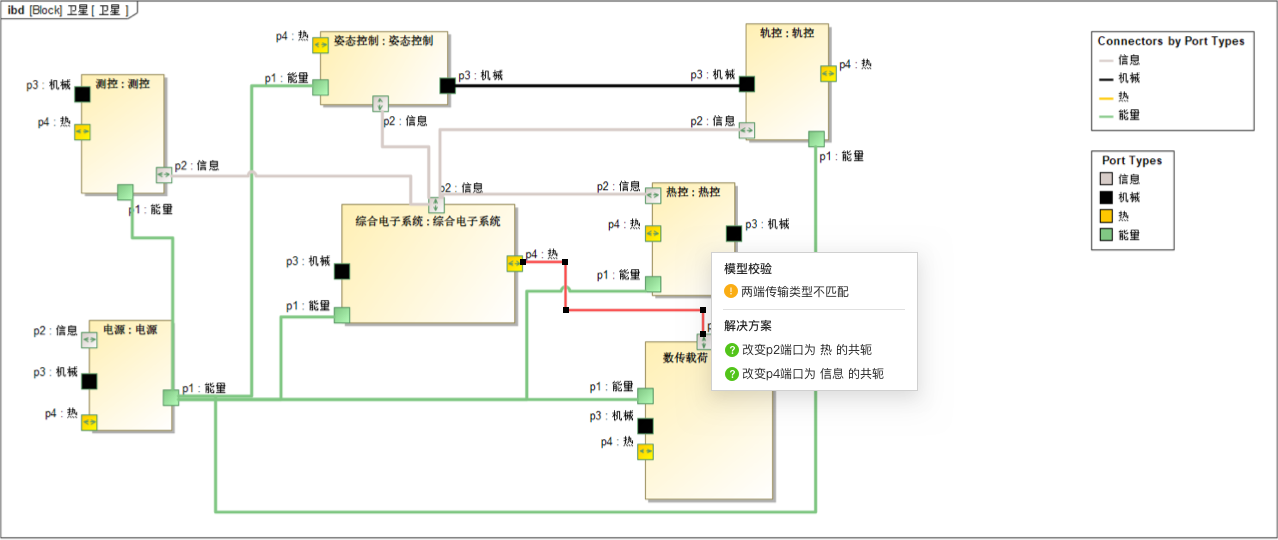
Related case study
Combine deterministic checks and AI semantic review of requirements, model relationships and rules to produce traceable findings for human adjudication.
Read the full case studyRelated standards and technical documentation for solution selection and implementation.
Describe your phase objectives and constraints without classified details, and we will provide scope recommendations.