
Robotic Tightening Cell Layout and Cycle-Time Simulation
01
Project Background
Each station must match the overall line cycle time.
Manual tightening often exposes consistency and cycle-time problems first. When evaluating automation layouts, our goal is to align robot operations with production-line requirements, rather than simply demonstrate reachable poses.
First, specify picking, positioning, tightening, waiting, and withdrawal individually. Omitting handling, fixture movements, or upstream and downstream waiting makes the resulting cycle time unsuitable for equipment selection.
02
Technical Approach
Model the scene and action sequence together.
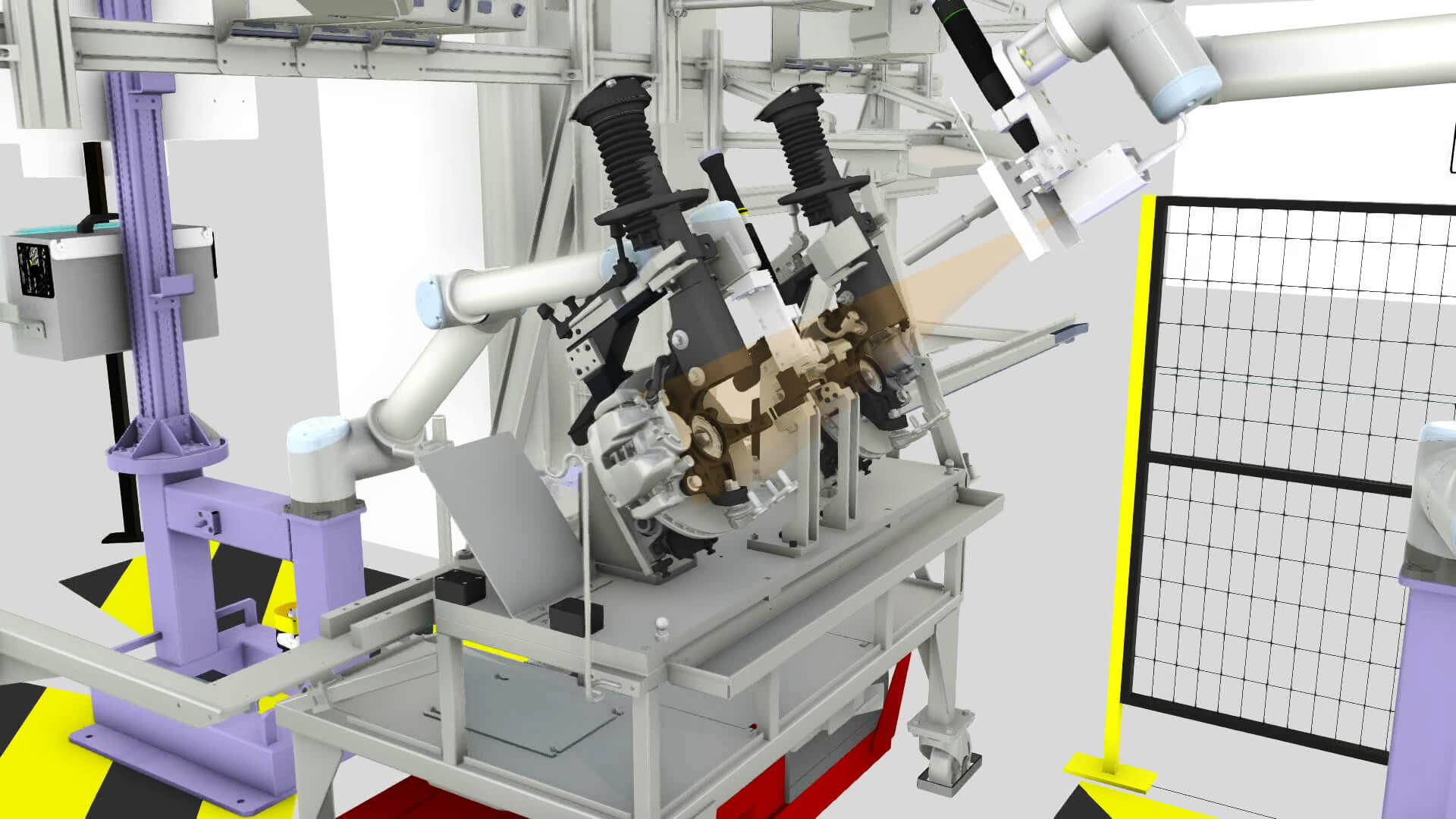
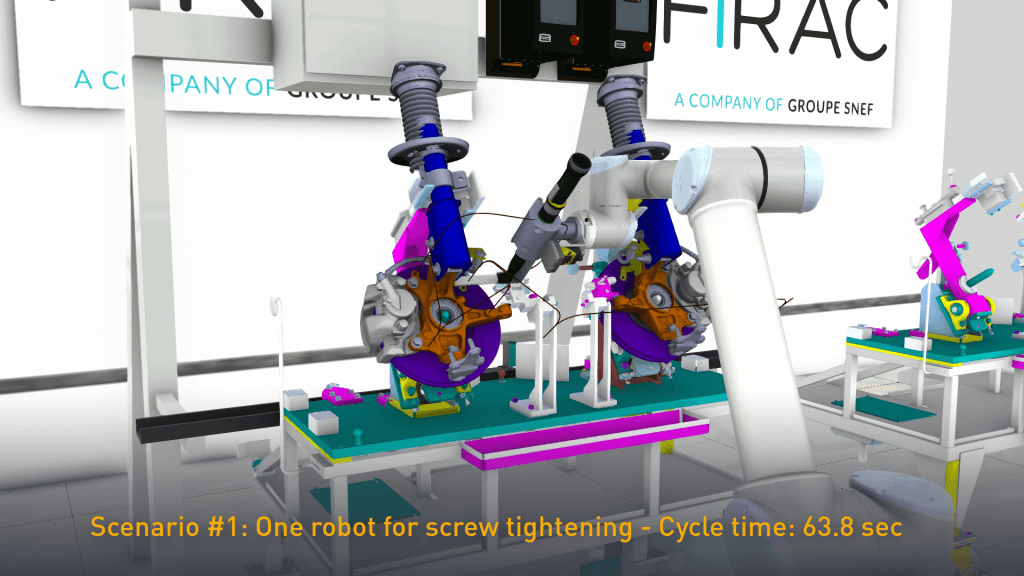
We compare configurations including a single robot, two robots side by side, and two robots facing each other, examining process and cycle-time differences under identical task conditions.
Before modeling, we check coordinates, tool lengths, workpiece poses, and key spatial constraints, then establish action sequences and resource occupancy. Simulated duration comes from explicitly defined process and motion models, not animation playback speed.
03
Implementation Process
Make comparisons reviewable.
Fix the baseline first, then adjust robot count, layout, and task allocation in turn. Retain model versions and input conditions for each change so that improvements can be attributed to specific factors.
For unreachable actions or interference, record the cause instead of hiding it with camera angles. Visualization and cycle-time data are reviewed together.
04
Deliverables and Acceptance
Deliverables include scene source files, action sequence tables, robot and tool configurations, comparisons, assumptions, and issue lists. Screen recordings supplement the demonstration; they do not replace models and process data.
Acceptance checks cover key poses, resource waiting, action precedence constraints, and rerun consistency. Whether controller runs, tooling processes, and on-site safety are included is specified separately in the contract, rather than grouped with offline simulation.
05
Applicability
Suitable for screening options, technical reviews, and risk discussions before station upgrades, as well as translating process requirements into comparable candidate layouts.
If the input is only a floor plan, the first phase is a proof of concept. Precise cycle-time commitments also require actual equipment motion capabilities, process times, and site constraints.
06
Implementation Outcomes
Use simulation to identify implementable layouts.
We compare single-robot, side-by-side dual-robot, and face-to-face dual-robot layouts using the same process and cycle-time definitions, grounding equipment selection in replayable simulation records.
After production starts, continue measuring waiting, interference, replenishment, and fault-recovery times. Check simulation conclusions against continuous production records, rather than using one ideal cycle as proof of efficiency.