
Vibration Suppression and Virtual Commissioning for Injection Molding Equipment
01
Project Background
Where does vibration come from after a speed increase?
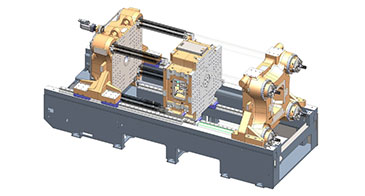
This project addresses vibration and mechanical loads following an increase in injection molding equipment speed. Changing speed commands alone is no longer sufficient: first understand the physical system's response, then decide whether to adjust control or modify hardware.
Work starts with a measurable operating baseline. Select one critical motion axis and one recurring problematic condition, rather than pursuing equal modeling accuracy for every component of the entire machine from the outset.
02
Technical Approach
Operating data, dynamics models, and control integration.
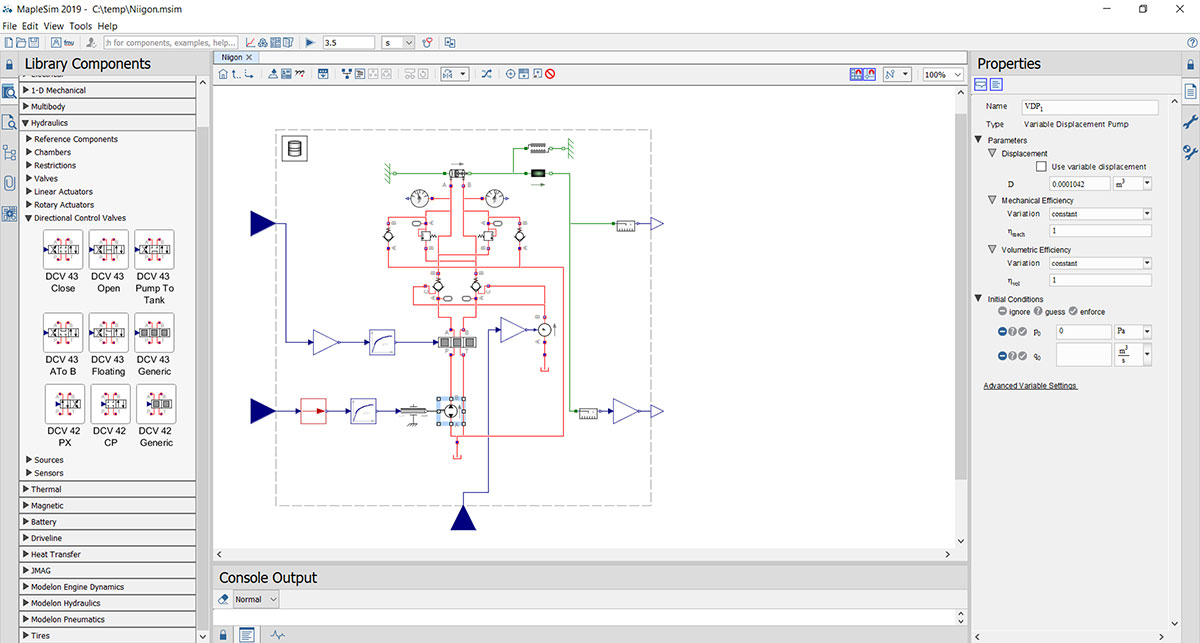
We support modeling with operating data such as speed, position, and torque, manage geometry, mass and inertia, transmission parameters, and control interfaces separately, and use the verified model to compare control strategies.
For parameters that are difficult to measure directly, we record the basis for identification and their applicable ranges; a fit to one run is not treated as the true value for every operating condition.
03
Implementation Process
Verify the model before comparing strategies.
Implementation proceeds through four stages: baseline data review, model verification, strategy trials, and on-site comparison. Inputs and versions are fixed at each stage to bring design comparisons forward, rather than omit on-site validation.
After control parameters change, we rerun the original key operating conditions to confirm that the problem has not merely shifted to another speed range.
04
Deliverables and Acceptance
Deliver the model source project, parameter sources, interface descriptions, control configurations, run logs, and comparison curves. Acceptance requires reproducing selected operating conditions in the recipient's environment and explaining how raw data align with simulation outputs.
Agree statistical windows and units for metrics such as peak vibration, settling time, and drive load before work begins. Final performance depends on data quality, modeling boundaries, and on-site conditions.
05
Applicability
Suitable for optimizing equipment with repetitive motion, recordable axis states, and permission for offline analysis. It is not suitable for connecting an unverified model directly to production control.
If this phase delivers software simulation only, explicitly exclude any guarantee of physical-machine performance. Where on-site commissioning is required, separately confirm equipment permissions, safety responsibilities, test windows, and emergency shutdown arrangements.
06
Implementation Outcomes
Address cycle-time issues in the model first.
We first establish a verified equipment model, analyze vibration and compare control strategies in a virtual environment, and then decide whether on-site changes should target control or hardware, reducing reliance on hardware modifications and on-site trial and error.
Assess cycle-time improvement by comparing cycle duration, residual vibration, and downtime before and after changes under the same product, load, and quality constraints, confirming that gains do not come at the expense of quality or service life.