
Lunar Rover Virtual–Physical Comparison and Surface Environment Validation
01
Project Background
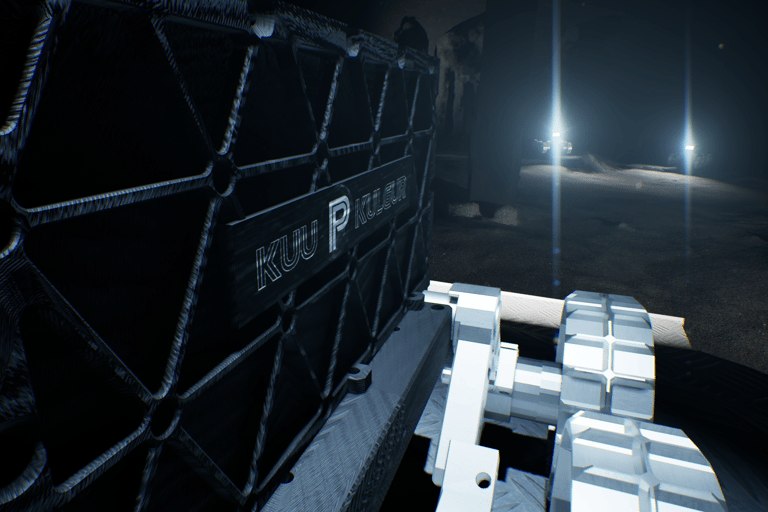
This project compares vehicle operation with virtual scenes in a ground-based lunar simulation environment to validate control software, perception and mission workflows, focusing on coordinates, poses, mission interfaces and replay consistency.
02
Technical Approach
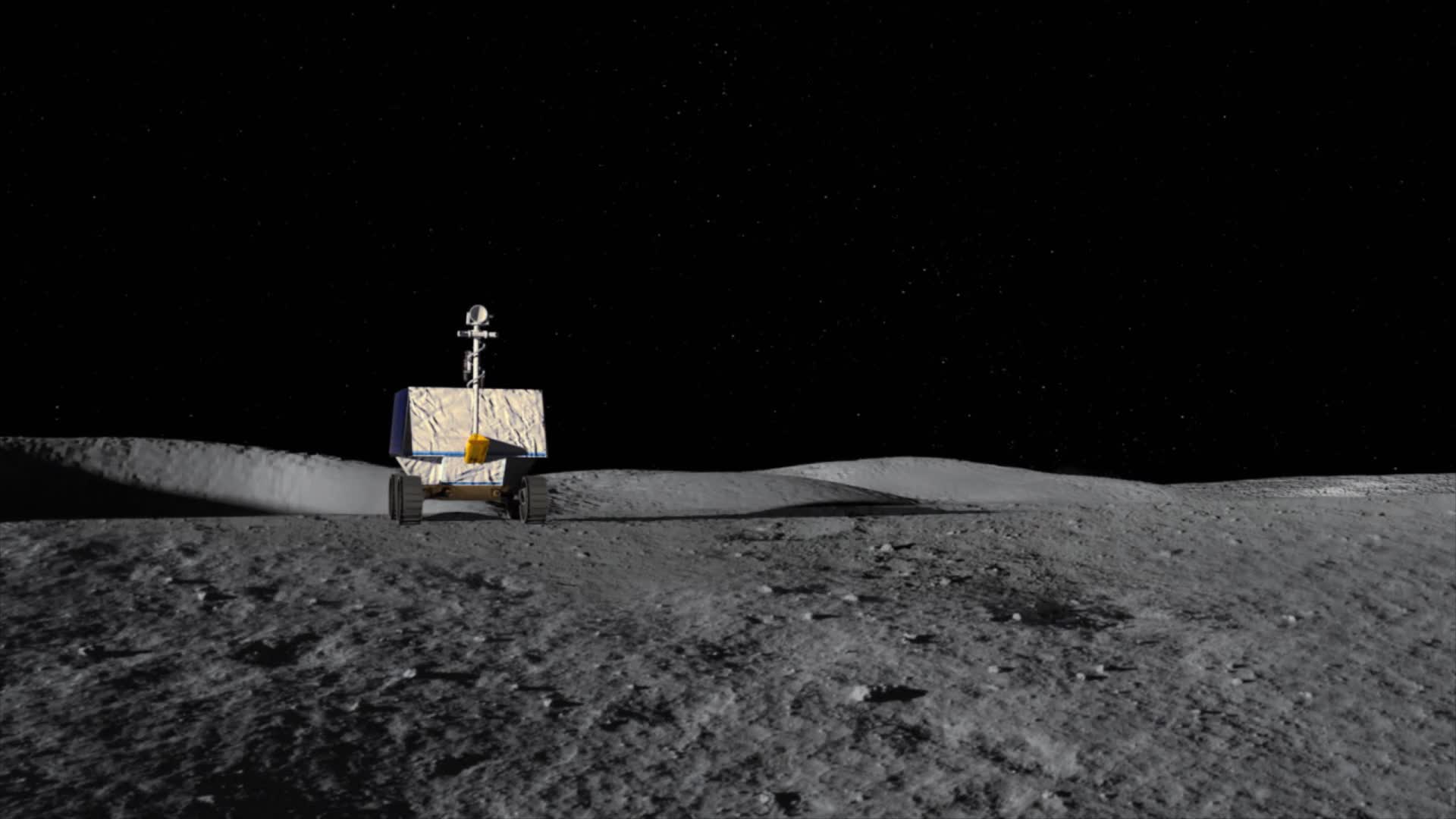
Build assets in separate layers for the vehicle body, joints, sensors, and environment. Visual scenes handle space and lighting, motion models handle motion responses, and the mission layer handles workflows and states. State the evidence supporting predictive capabilities such as wheel–soil interaction and thermal environments separately; visual realism does not imply physical accuracy.
03
Implementation Process
First align coordinates, vehicle poses, and sensor mounting, then record physical and virtual trajectories for the same mission segment. Log communication delays, missing data, and manual operations, and progressively compare measurable metrics. Synthetic images can support perception research, but evaluation still uses independent data.
04
Deliverables
Deliver the robot scene project, physical–virtual coordinate mappings, mission replay records, and model verification and applicability notes. Each item identifies its version, inputs, operating environment, and corresponding acceptance steps.
05
Acceptance Approach
Assess visual, functional, and physical accuracy separately. Ground-based lunar analog environments support some validation but are not equivalent to validation across the full lunar environment. Retain parameter sources, validated operating conditions, and uncovered conditions in the handover.
06
Implementation Outcomes
Bring software verification forward into the virtual environment.
We check mission interfaces, scene configurations, and exception handling before physical tests, reducing software troubleshooting during use of expensive test facilities.
Evaluation records issues found in the virtual environment, the number of repeated ground tests, and physical–virtual trajectory deviations for the same mission; rendering realism does not replace dynamics validation.